Forgotten Children's Fund

Our family gathered together to spend time selecting and wrapping gifts for those less fortunate than us. We get together in honor of our brother Bryan who opened a letter from a little boy asking Santa to please stop at their home. From that letter came the Forgotten Children's Fund which now finds these children and delivers them a Christmas.

Our highlights:


 Each group is given a family, you get to choose gifts from the warehouse and wrap them (as best you can). The award for the best gift wrapper went to our Father. He never complained, got frustrated or produced a package that was not acceptable. And I am a liar.... 


This is where they all end up before delivery. Each child in the family receives 3 toys, a coat, scarf and hat, a stocking bag and sometimes even a bike. The parents receive a blanket and 1 or 2 gifts each as well. A very generous program.

I tried something new with my little point and shoot which did not work out so many of my photos were blurry. Sorry Family.

Christmas Snapshots

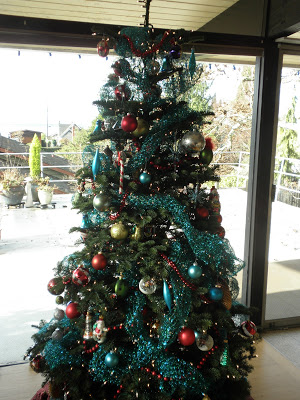
A favorite Christmas season pastime is sitting by our tree and picking out the little "vignettes" my kids created. This year I handed them the ornaments (gotta keep control) and they placed them on the tree. Many of the ornaments have stories which is kind of fun.
 the chandelier is from a family wedding.

 Sister Ex brought this sweet ceramic bird back from Paris.
 The gold and blue vintage ball game from Etsy. It felt strange purchasing it in the fall but I knew they would have a place on our tree.
And this glitzy bird came from Grace Home. We had only 20 minutes to power shop before we hopped on a plane back to our Seattle lives. What a fun trip that was.

Reading...

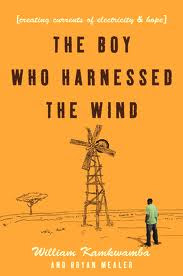
The Boy Who Harnessed the Wind
by William Kamkwamba & Bryan Mealer

Absolutely a must read for just about everybody. This is an incredibly heartwarming and inspiring story that has been an honor to read.


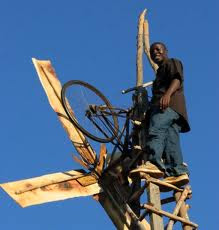
William Kamkwamba was born in Malawi, a country where magic ruled and modern science was mystery. It was also a land withered by drought and hunger, and a place where hope and opportunity were hard to find. But William had read about windmills in a book called Using Energy, and he dreamed of building one that would bring electricity and water to his village and change his life and the lives of those around him. His neighbors may have mocked him and called him misala—crazy—but William was determined to show them what a little grit and ingenuity could do.


Enchanted by the workings of electricity as a boy, William had a goal to study science in Malawi's top boarding schools. But in 2002, his country was stricken with a famine that left his family's farm devastated and his parents destitute. Unable to pay the eighty-dollar-a-year tuition for his education, William was forced to drop out and help his family forage for food as thousands across the country starved and died.


Yet William refused to let go of his dreams. With nothing more than a fistful of cornmeal in his stomach, a small pile of once-forgotten science textbooks, and an armory of curiosity and determination, he embarked on a daring plan to bring his family a set of luxuries that only two percent of Malawians could afford and what the West considers a necessity—electricity and running water. Using scrap metal, tractor parts, and bicycle halves, William forged a crude yet operable windmill, an unlikely contraption and small miracle that eventually powered four lights, complete with homemade switches and a circuit breaker made from nails and wire. A second machine turned a water pump that could battle the drought and famine that loomed with every season.


Soon, news of William's magetsi a mphepo—his "electric wind"—spread beyond the borders of his home, and the boy who was once called crazy became an inspiration to those around the world.


Here is the remarkable story about human inventiveness and its power to overcome crippling adversity. The Boy Who Harnessed the Wind will inspire anyone who doubts the power of one individual's ability to change his community and better the lives of those around him.


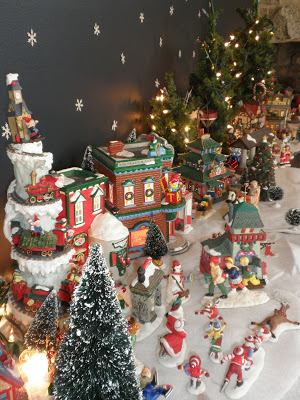
More Christmas Villages

My best friend Dagny has fun holiday decor. It feels very Palm Springs-y to me. I could park my vintage Airstream next to her tree and they'd have a "conversation" about the good ol' days.



Son Max gets to set up their Christmas village while Dagny over sees the 12 cords that must be managed safely. Other than that, his 6 year old self creates every little vignette you see. It sits on a low slate "bench" in their 60's style home.


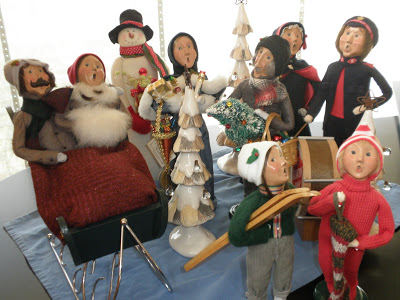
Christmas Villages

My Christmas village is on the windowsill of the kitchen sink. I had it built deeper than all of my other sills so that I could create my "alter". I make a few changes here and there but for the most part I have it decorated with things that are meaningful to me. I got the idea from my Italian Grandmother who had a shrine consisting of a statue of the Virgin Mary, Jesus on the cross, and flowers. When I asked her about it she said she looks at it as she does the dishes and it reminds her to pray. I loved that thought and created a similar vignette. In the city, we are very close to our neighbors-as you can see I would look out at their house if I did not have my sweet "alter".


The miniature figurine is one of the Spice Girls. She is my dishwashing cheerleader and I work her into every vignette.

Reading

Just finished Lacuna by Barbara Kingsolver. I am not kidding when I tell you that it took me until page 160 to finally be pulled in. It is very much worth reading.


Short Review:
From Publishers Weekly


Starred Review. Kingsolver's ambitious new novel, her first in nine years (after the The Poisonwood Bible), focuses on Harrison William Shepherd, the product of a divorced American father and a Mexican mother. After getting kicked out of his American military academy, Harrison spends his formative years in Mexico in the 1930s in the household of Diego Rivera; his wife, Frida Kahlo; and their houseguest, Leon Trotsky, who is hiding from Soviet assassins. After Trotsky is assassinated, Harrison returns to the U.S., settling down in Asheville, N.C., where he becomes an author of historical potboilers (e.g., Vassals of Majesty) and is later investigated as a possible subversive. Narrated in the form of letters, diary entries and newspaper clippings, the novel takes a while to get going, but once it does, it achieves a rare dramatic power that reaches its emotional peak when Harrison wittily and eloquently defends himself before the House Un-American Activities Committee (on the panel is a young Dick Nixon). Employed by the American imagination, is how one character describes Harrison, a term that could apply equally to Kingsolver as she masterfully resurrects a dark period in American history with the assured hand of a true literary artist. (Nov.)


It does make me want to read more on Frida. That was the most colourful portion of the book.